Women Dominate Afghanistan’s Carpet Industry but Earn Low Wages: UNAMA

The United Nations Assistance Mission in Afghanistan (UNAMA) says that despite women making up the overwhelming majority of the workforce in Afghanistan’s carpet industry, they remain concentrated at the lowest levels of production and receive minimal wages.
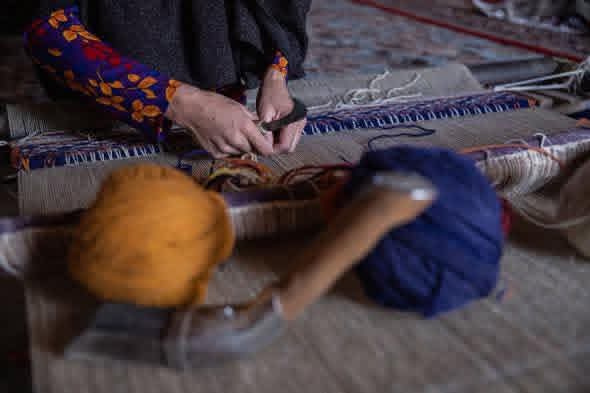
In a statement released on Tuesday (16 January), UNAMA noted that around 90 percent of spinners and weavers in Afghanistan’s well-known carpet sector are women, underscoring their central role in sustaining one of the country’s most important traditional industries.
According to the statement, UN Women, in cooperation with various partners from the carpet industry, including regional trade partners, held a specialized workshop last week aimed at expanding economic opportunities for Afghan women across all stages of carpet production.
The workshop was held in the Ayritom Free Economic Zone in Uzbekistan, near the border with Afghanistan’s northern Balkh province. UNAMA said Balkh accounts for approximately 70 percent of Afghanistan’s total national carpet production.
Susan Ferguson, the UN Secretary-General’s Special Representative for Women in Afghanistan, emphasized that support for women should extend throughout the entire production chain — from wool production and spinning to weaving, finishing, and business development.
She added that Afghanistan’s carpet industry has survived largely due to the skills, resilience, and hard work of Afghan women, who have kept the sector alive despite ongoing challenges.
UN Women reaffirmed its commitment to strengthening women’s leadership in the carpet industry and ensuring that women benefit fairly from the significant cultural and economic value they create.
The carpet industry remains one of Afghanistan’s key production and export sectors, with women forming the backbone of this traditional craft.